
20th Sunday in Ordinary Time
August 14, 2026
Gospel Reflection
Matthew 15:21-28
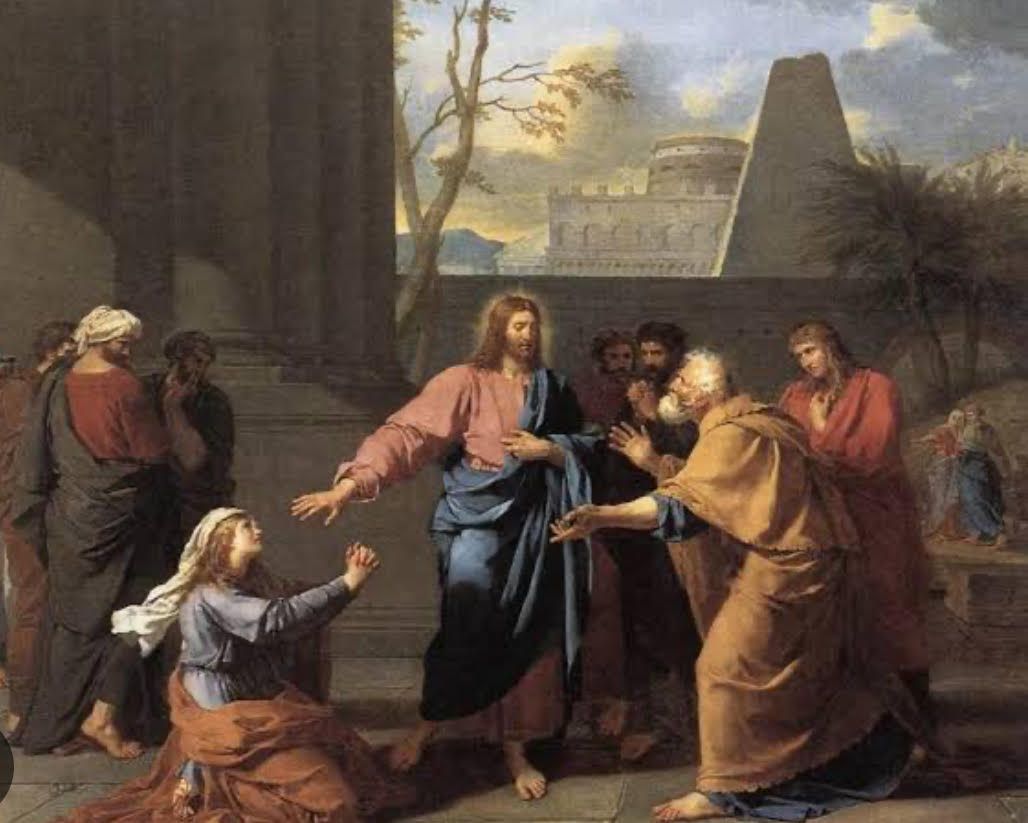
Once again we see, in today’s Gospel, how Jesus has taken the Apostles with him to a distant place, this time the region of Tyre and Sidon. These are cities which still exist, and which even make the news, though not always for a happy reason, lying as they do in war torn southern Lebanon. But the place would have been in those times, for the Apostles and Our Lord, a peaceful one, giving occasion for rest and lengthy conversations. Here too, as on the occasion when Jesus multiplied bread for a crowd hungry for hope and consolation, the intimate gathering of Jesus and the Twelve is interrupted by someone desperate for attention and help. It is a woman of that pagan region, who is overwhelmed with grief over the diabolical torments of her daughter. She too has heard of the man from Galilee that many consider to be the Messiah and Saviour of the Jews. For her, he is a man of God, known to cure the sick and release people from evil spirits.
When the Apostles, whom she first approaches, ask Jesus to attend to her needs, Our Lord responds in a way that might surprise or even trouble us. He appears to reject her and her petition, with some words that many today would interpret as humiliating. “I was sent only to the lost sheep of Israel…..It is not fair to take the children’s food and throw it to the house- dogs (pups).” Like with all passages of Sacred Scripture, we need take the context of each text and the overall vision of Our Lord’s teaching into account. Jesus did come to save everyone and, for God, rank or race does not determine the merit of the individual. How-ever, the salvation of the human race is according to a plan in the mind of our all knowing and all loving Father. Abraham and his descendants, the Jews, were called to have a special part in that history of redemption. There is order in the works of God, and just as we are asked to live according to an order of charity, giving first attention to those closest to us, Jesus centred his efforts of teaching and healing upon those who were meant to be a light to the nations. Such was the expectation he had of the Apostles. Though Jesus experienced many disappointments with his own people, and even with the Twelve, he persevered in following this order of divine justice and love. At the same time, he entrusted to his Jewish disciples the responsibility to go out to all nations, teaching and baptising all who came to believe so they might form a part of the new kingdom, the new People of God.
It is good to realize at the same time that Jesus does respond to this pagan woman’s request. He frees the daughter from her state of oppression. What is more, he adds words of praise, heard by all the apostles, for the woman and her faith. For these men, she has served as a lesson of humility and perseverance in seeking the good of her child. Her attitude has contrasted with that of many of Jesus’ countrymen, who failed to believe out of pride, attachment to power, greed or cynicism. How important faith is in our lives of relationship, not only with God but with others. Like the good woman of today’s Gospel may we never become disheartened in seeking the good of family and friends, or of society as a whole. May we learn to rely on God for his help and not doubt that he always listens and has in mind our good, and the good of those for whom we are concerned.