
29th Sunday in Ordinary Time
October 21, 2026
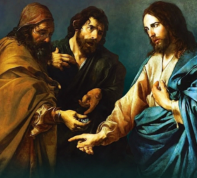
Gospel Reflection - Matthew 22:15-21
and Pope Leo XIV: encyclical Magnifica Humanitas: A Church journeying through human history
19. The Church is present in the world as a sign of unity for the entire human family. She recognizes today’s questions and challenges as the current setting in which to carry out her particular vocation of listening, dialogue and service, and of being responsive to everything concerning the lives of contemporary men and women. This involvement in people’s lives helps the Church understand ever more clearly that her mission has a historical scope and entails a responsibility for the way in which social relations are built. For this reason, she cannot consider herself a stranger to the forces shaping society. On the contrary, the Church actively participates in the processes by which society grows and is organized, and she offers her own contribution to the creation of a more just and fraternal society.
20. The Church’s vocation and duty to accompany humanity in the specifics of history leads her to recognize that earthly realities possess their own proper character and order. The Second Vatican Council expressed this principle with particular precision in the Pastoral Constitution Gaudium et Spes, whose sixtieth anniversary we remembered and celebrated with gratitude on 7 December 2025: “If by the autonomy of earthly affairs is meant that created things and societies themselves enjoy their own laws and values… then the demand for autonomy is perfectly in order.” This affirmation shows that creation bears the imprint of an original goodness that our human outlook must preserve, cultivate and bring to fulfilment. In this regard, the Church offers herself in a way that helps to interpret reality in all its depth. She supports with humble firmness the choices that promote the dignity of every person, the cohesion of communities and the good of all. The Church thus stands alongside the world without overpowering it, so that the promise of justice and peace that the Holy Spirit continues to sustain in the heart of humanity may come to fruition in every human Endeavor.
21. Recognizing that God upholds the freedom of men and women in the unfolding of history, the Second Vatican Council affirmed the distinction between the ecclesial community and the political community, emphasizing that each must operate with full autonomy. The Church’s presence in the world is also expressed through her relationship with civil society and public institutions. By engaging with these entities, the Church acknowledges the value of social and political realities and honours their specific responsibilities, supporting everything that fosters the wellbeing of individuals and strengthens the fabric of society. The Church does not claim to assume the functions belonging to the State. On the contrary, she esteems those who serve the common good, and she firmly acknowledges the responsibility that civil institutions hold within society. At the same time, the mission entrusted to the Church prompts her to address the real suffering of the men and women of our time. This closeness does not stem from an intent to supplant civil institutions, much less from an implicit criticism of their work. Rather, it stems from evangelical charity, which impels the Church to draw near to the wounds of humanity whenever they surface with greater severity. When the Church intervenes, she does so following the example of the Good Samaritan, with discretion and closeness, aware that what arises from urgent necessity cannot become the norm, nor replace the institutional responsibilities proper to the civil community.
22. Starting from this twofold acknowledgment — the autonomy of earthly realities and the distinction between ecclesiastical and political spheres of competence — allows for a clearer understanding of the direction that the Second Vatican Council set for the Church in her relationship with the world. Gaudium et Spes reminds us that “it is the task of the whole People of God, particularly of its pastors and theologians, to listen to and distinguish the many voices of our times and to interpret them in the light of God’s word, in order that the revealed Truth may be more deeply penetrated, better understood and more suitably presented.” Listening to the “many voices” is no mere sociological exercise, but instead requires spiritual discernment. Guided by the Spirit, the People of God come to recognize in cultural and social transformations both the signs of the presence of Christ, who comes and guides history toward its fulfilment, and those aberrations that obscure his face.