
Palm Sunday
March 27, 2026
Gospel Reflection
Matthew 21:1-11
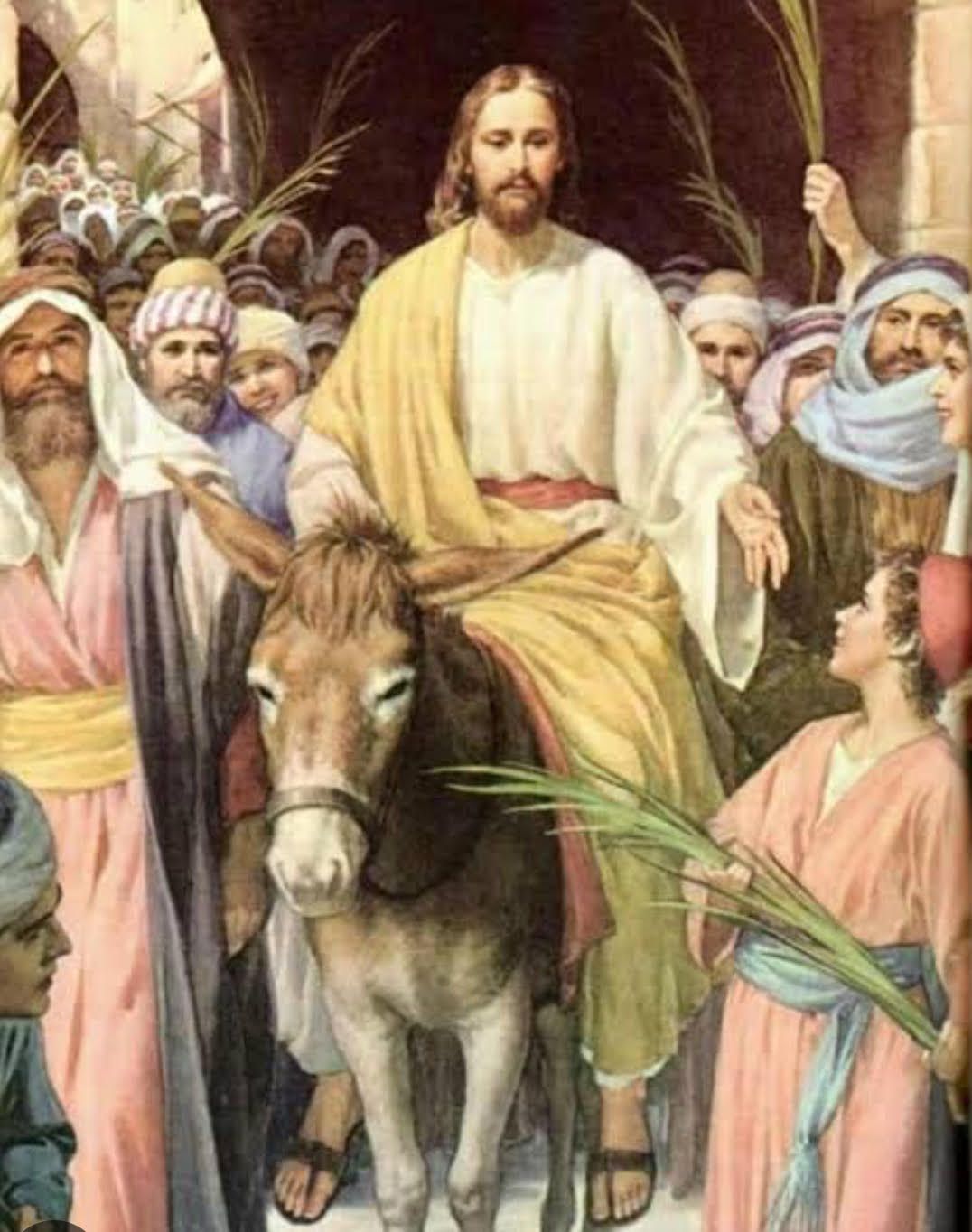
Our Lord enters Jerusalem amid great acclaim. The One who had always opposed any public display of praise, who had hidden when the people wanted to make him King, today lets himself be brought into the Holy City in triumph. Only now, when he knows death is near, does he agree to be hailed as the Messiah. Jesus knows that, in reality, he will reign from the Cross, since the same people who now joyfully acclaim him will soon abandon him and lead him to Calvary. The palms will become whips; the olive branches, thorns; the cheers, merciless jeers.
The liturgy, with the ceremony of the blessing of the palms and the texts of the Mass (including the account our Lord’s Passion), shows how closely united joy and suffering are in Christ’s life. Saint Bernard points to the close union between laughter and lamentation on this day. The Church “shows us today the new and marvelous union between the passion and the procession; the procession produces acclaim, the passion, lamentation.”[1]
Saint Josemaría said: “‘The palm leaves,’ writes Saint Augustine, ‘symbolize homage, for they stand for victory. Our Lord is on the point of conquering by dying on the Cross. Under the sign of the Cross, he is about to triumph over the devil, the prince of death.’ Christ is our peace because he is the Victor.”[2] Reading the account of the Passion presents us with many persons who played a role in that scene, few of whom suspected the victory Christ would soon attain. We can ask ourselves this week as we relive these events: “Where is my own heart? Which of
these people do I resemble?”[3] How strong is my faith when I contemplate the crucial events the Church invites us to appreciate more fully during these days?
“What is really happening in the hearts of those who acclaim Christ as King of Israel? Clearly, they had their own idea of the Messiah, an idea of how the long-awaited King promised by the prophets should act. Not by chance, a few days later, instead of acclaiming Jesus, the Jerusalem crowd will cry out to Pilate: ‘Crucify him!’, while the disciples, together with others who had seen him and listened to him, will be struck dumb and disperse. The majority, in fact, were disappointed by the way Jesus chose to present himself as Messiah and King of Israel. This is the heart of today’s feast, for us too.”[6]
The experience of those who received Jesus with palms that day can help us to consider what our own idea of Jesus is, what our idea of his reign is. It may happen, for example, that we are sometimes disappointed at how the redemption is being carried out, at its apparently slow pace. Sometimes we want God to triumph quickly, confusing our plans with his. We resist accepting that God is determined not to compromise our freedom nor that of those around us. His love is so refined that it is never imposed. He refuses to take advantage, for example, of the people’s acclaim for his own benefit.
“The heart of Jesus was moving on another track, on the sacred path known to him and the Father alone: the path that leads from ‘the form of God’ to ‘the form of a servant,’ the path of self-abasement born of obedience ‘unto death, even death on a cross’ (Phil 2:6-8). He knows that true triumph involves making room for God.”[7] It means making room for the silent and yet powerful action of God, who makes all things new through the Son’s love for the Father.
And on this path we find the first and most faithful follower of Jesus, his mother Mary. “She is not to be found amid the palms at Jerusalem … But she doesn’t flee from the contempt at Golgotha; there she stands, juxta crucem Jesu, beside his Cross.”[8] And we, by an undeserved grace, can be close beside her.
[1] Saint Bernard, Sermon on Palm Sunday, 1, 1.
[2] Saint Josemaría, Christ is Passing By, no. 73.
[3] Francis, Homily, 13 April 2014.
[6] Benedict XVI, Homily, 1 April 2012.
[7] Francis, Homily, 14 April 2019.
[8] Saint Josemaría, The Way, no. 507.