
Pentecost
May 22, 2026
Gospel Reflection
John 20:19-23
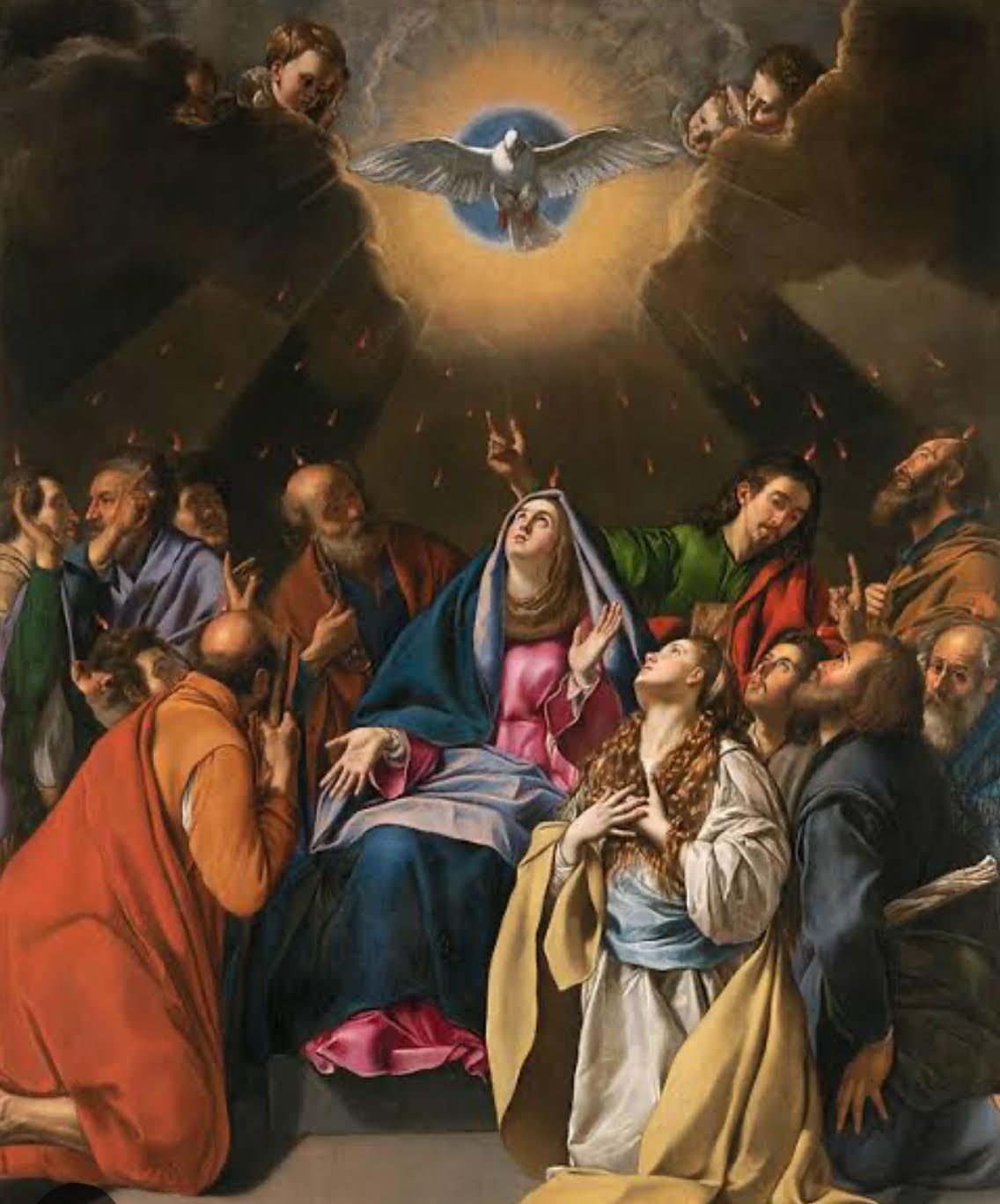
Ten days after the Ascension of Our Lord Jesus Christ, while the Apostles and certain disciples and relatives of Jesus were in prayer together with Mary, His Mother, the Holy Spirit manifested Himself under noticeable signs of wind and fire to signal the birth of the Church of Christ. This dramatic moment was followed by a surge of courage and interior enlightenment of the Apostles, who at the time of Jesus’ death had been confused and frightened. St. Luke tells, in his Acts of the Apostles, how other miraculous effects marked this day. These included the remarkable experience of many pilgrim visitors to Jerusalem, who heard the Apostles’ testimonies about Jesus in their own languages. Peter and the others, who were ignorant of these diverse languages, were able, nevertheless, to communicate the truth of Christ to foreigners. What is more, a very sizable number of men and women were convinced by what they heard to the point of requesting the baptism of Christ on that very day.
The origin of the Catholic Church and our Christian faith is not something shrouded in a murky past. Jesus lived at a very definite time known to us through historical writings of the period. Luke’s Acts is a chronicle beautifully compiled from what had been recounted by others or witnessed by himself. Both the Church’s birth and growth were marked by the action of the Holy Spirit and Luke is particularly careful to call attention to that.
Today we celebrate this outpouring of God’s grace upon the first Christians drawing them into communion and enabling them to reach out and draw others into union with Christ. This beginning of the Church’s life and mission occurred on a day already celebrated by these disciples and their Jewish contemporaries as a festival of “first fruits” of the harvest. It had also come to mark the sealing of the Old Covenant of God’s people through His servant Moses. This festival had been given the name “Pentecost” by Jews who spoke mainly Greek. The word means “fifty days” and refers to the time between the celebration of Passover (our Easter) and “Shavuot”, the Hebrew name for the feast. So the same period marked the time between Jesus’ Passion and Resurrection and the fulfilment of His promise to send the Holy Spirit to teach, strengthen, console and guide the Apostles.
We should never lose sight of this essential reality in the Church. The Church has its human side because it calls together ordinary people like us. This side of the Church is therefore marked by imperfection and even, sadly, the effects of personal sins. Yet it can never lose its divine side, which is Christ and His Spirit. The Holy Spirit guarantees the Church’s ongoing existence, its constant renewal, its continual self purification and sanctifying action through its holy teachings, its life-giving sacraments, and the supernatural support we can experience with the communion of saints, that is, through our union with those on the road to holiness or already confirmed in holiness in heaven.
On the feast of Pentecost we could say that Jesus’ mission on earth ends and ours begins, encouraged, impelled and sustained by his same Spirit. We receive his same mission, entrusted by the Father to his Son. “Peace be with you. As the Father has sent me, even so I send you” (Jn 20:21). We are filled with gratitude for such a great gift and want the fire that burned in Christ’s heart, and that he longed to see enkindled on earth, to burn in our hearts too. We want the “tongues of fire” that appeared over the heads of the apostles, and that are present in our souls, to spread to the furthest corner of the world.
‘I will not leave you orphans.’ Today, on the feast of Pentecost, Jesus’ words remind us also of the maternal presence of Mary in the Upper Room. The Mother of Jesus is with the community of disciples gathered in prayer: she is the living remembrance of the Son and the living invocation of the Holy Spirit. She is the Mother of the Church. We entrust to her
intercession, in a particular way, all Christians, families and communities that at this moment are most in need of the Spirit, the Paraclete, the Defender and Comforter, the Spirit of truth, freedom and peace.”[8]