
Christ the King
November 18, 2026
Gospel Reflection
Matthew 25:31-46
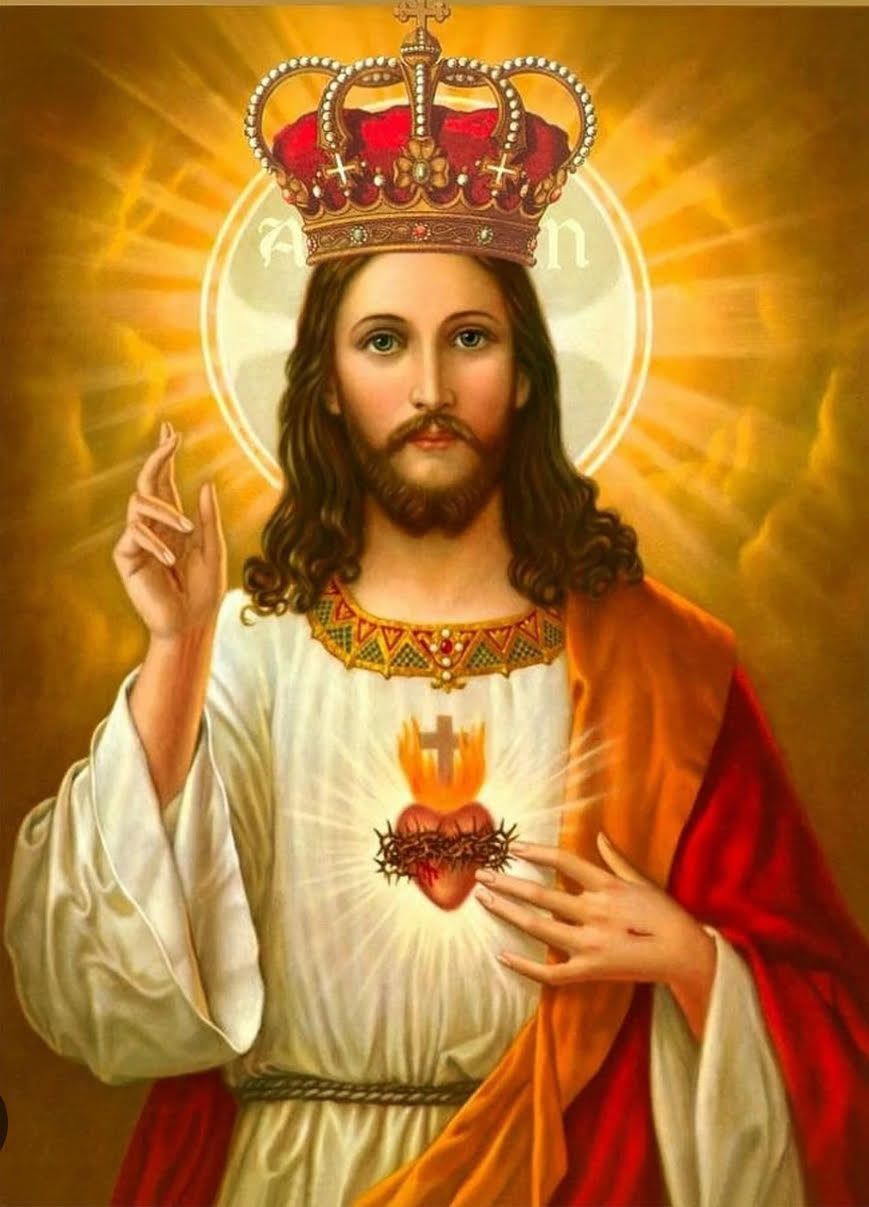
The Solemnity of Christ the King is as it were a synthesis of the entire salvific mystery (John Paul II, Address, 20 November 1983). This feast brings the liturgical year to a close. Over the past months we have celebrated the mysteries of the life of the Lord. Now we contemplate Christ in his glorified state as King of all Creation and of our souls. The feasts of the Epiphany, Easter and the Ascension also relate to Christ as King and Lord of the Universe, but the Church has wanted to have this feast as a special remembrance to modern man, who seems somewhat indifferent to his supernatural destiny (Pius XI, Encyclical, Quas primas, 11 December 1925).
The texts for today’s Mass emphasize the love of Christ the King. He did not come to establish his kingdom by force. His ‘weapons’ are goodness and a shepherd’s solicitude: I myself will search for my sheep, and will seek them out As a shepherd seeks out his flock when some of his sheep have been scattered abroad, so will I seek out my sheep; and I will
rescue them from all places where they have been scattered on a day of clouds and thick darkness (First Reading, Year A, Ezekiel 34:11-12).
The Lord tends to his lost sheep, to those men and women who have gone astray through sin. He takes care to heal their wounds. He goes so far as to die for his sheep. As King He came to reveal God’s love, to be the Mediator of the new Covenant, the Redeemer of mankind. The kingdom which Jesus initiated works in its interior dynamism as ‘leaven’ and a ‘sign ofsalvation’ to build a more just, more fraternal world, one with more solidarity, inspired by the evangelic values of hope and of the future happiness to which all are called. Therefore, the Preface of today’s Eucharistic celebration speaks of Jesus who has offered to the Father ‘a kingdom of truth and life, of holiness and grace, of justice, love and peace’ (John Paul II, Address, 26 November 1989).
This is what the Kingdom of Christ is all about. Each one of us is called to participate in this kingdom and expand it through our apostolate. The Lord should be present in our families, among our friends, neighbours and colleagues at work... Against those who reduce religion to a set of negative statements, or are happy to settle for a watered-down Catholicism; against those who wish to see the Lord with his face against the wall, or to put him in a corner of their souls, we have to affirm, with our words and with our deeds’, that we aspire to make Christ the King reign indeed over all hearts, theirs included (Saint Josemaria Escrivá, Furrow, 608).
Today’s feast is an anticipation of the Second Coming of Christ in power and majesty. His glorious return will fill the hearts of his faithful with joy and wipe away every tear. This feast is also a summons for us to impregnate with the spirit of Christ all temporal realities. The Second Vatican Council has declared: The expectation of a new earth must not weaken but rather stimulate our concern for cultivating this one. For here grows the body of a new human family, a body which even now is able to give some kind of foreshadowing of the new age. Hence, while earthly progress must be carefully distinguished from the growth of Christ's kingdom, to the extent that the former can contribute to the better ordering of human society, it is of vital concern to the Kingdom of God.
For after we have obeyed the Lord, and in his Spirit nurtured on earth the values of human dignity, brotherhood and freedom, and indeed all the good fruits of our nature and enterprise, we will find them again, but freed from stain, burnished and transfigured, when Christ hands over to the Father: ‘a kingdom eternal and universal... ‘On this earth that Kingdom is already present in mystery. When the Lord returns’ it will be brought into full flower (Second Vatican Council, Gaudium et spes, 39). We collaborate in the expansion of this kingdom whenever we make our ordinary world more human and more divine.