
18th Sunday in Ordinary Time
July 31, 2026
Gospel Reflection
Matthew 14:13-21
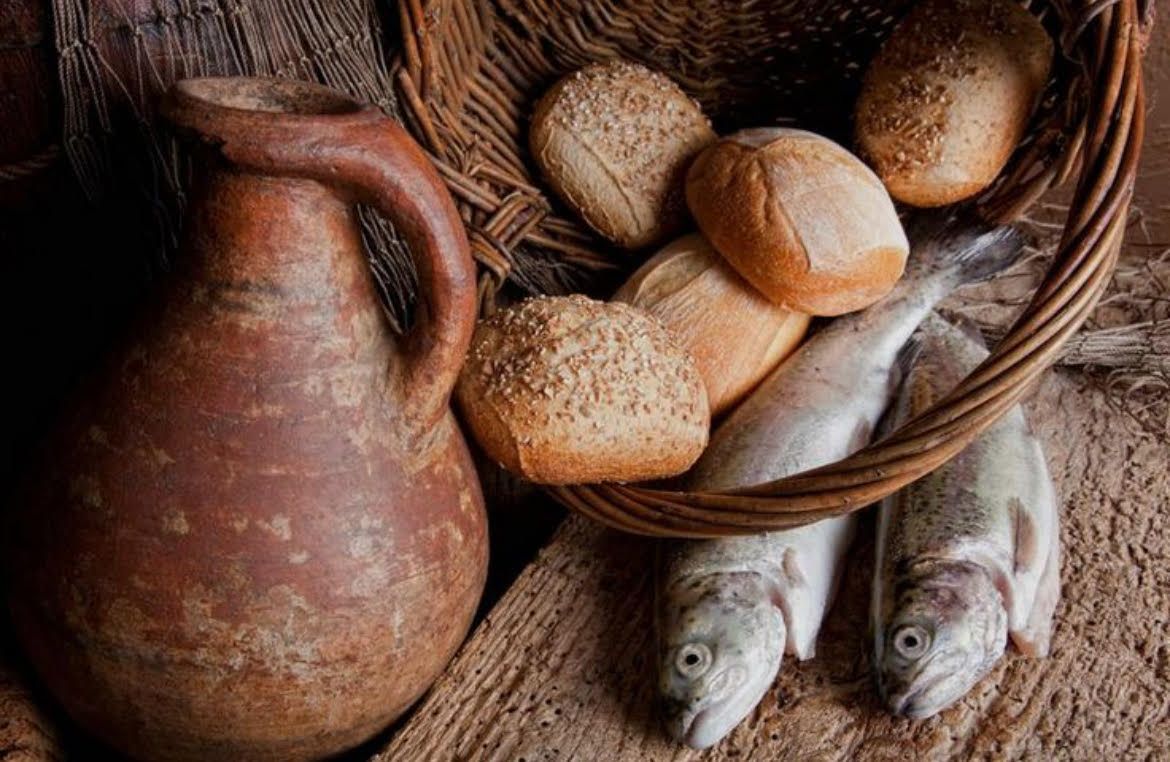
Today the evangelist Matthew tells us that the crowds were eagerly seeking our Lord. They hungered for his preaching and miracles so greatly that, when they finally found Him, they listened to him happily until sunset. On one of those occasions, the apostles suggested to Jesus that He send the people away before nightfall so they could find somewhere to buy food for their journey home. But our Lord, moved by those hearts that were so eager for his word, didn’t want to let them go without giving them one last gift.
Jesus knew it wouldn’t be easy to find food for so many people in the nearby villages and farms. So He decided to use that opportunity to teach his apostles an important lesson. Jesus wanted them to learn to trust Him, to dream big, and not to be deterred by difficulties. So He said, “You give them something to eat” (Mt 14:16). They didn’t understand this perplexing instruction: the time, the place and lack of resources made it impossible to feed that multitude. It would have required many cartloads of bread and a sum of money they didn’t have.
The apostles didn’t know what to do. One of them said to Jesus, “We have only five loaves here and two fish” (Mt 14:17). And our Lord replied: “Bring them here to me” (Mt 14:18). Those few loaves and fish became the raw material for the miracle. The same happens in our lives. God knows that by ourselves we can do very little, but He never stops asking us to place in his hands the little we have. Thanks to that small gift, Christ was able to feed the entire crowd. Therefore we can ask ourselves, “What do I bring to Jesus today? He can do a lot with one of our prayers, with a small act of charity for others, even with one of our sufferings handed over to His mercy. We give our small things to Jesus, and He works miracles. This is how God loves to act: He does great things, starting from those small things, those freely given ones.” (Francis, Angelus, 25 June 2021) When we humbly offer Him what we are and what we have, even if it seems insufficient, our Lord can multiply it far more than we can imagine.
The apostles thus took part in the miracle. Despite their littleness, they became a concrete sign of our Lord’s omnipotent action. It was obvious that five loaves and two fish could not feed such a large crowd. But what seemed insufficient was transformed into an abundant meal, from which “they all ate and were satisfied” (Mt 14:20). Today, too, our Lord is counting on us to satisfy the hunger for God in the people around us. The gifts He has given us – faith, the sacraments, vocation – are not just for ourselves: they are meant to pass through our hands and become nourishment for many. Saint Josemaría commented on this scene: “He could have gotten the bread from wherever he wanted… but no! He seeks human cooperation: he needs a child, a young boy, some pieces of bread and some fish. He needs you and me, and yet he is God! This should urge us to be generous in our response to his graces.” (Saint Josemaría, In Dialogue with the Lord, p. 99.) Jesus could do everything without us. But He wants to associate us with his compassion, so that our poverty, united with his mercy, may become abundance for others.
At the end of the story, the evangelist adds a significant detail: twelve baskets were filled with leftover food (cf. Mt 14:20). These baskets, overflowing with unused bread and fish, teach us a message about divine grace and generosity. Jesus could have calculated precisely the amount of food needed for everyone. Instead, He wanted more than what was necessary so that the disciples could gather what was left over. Thus He showed that God bestows his gifts and graces without measure, without human calculations of efficiency or mere sufficiency.