
16th Sunday in Ordinary Time
July 17, 2026
Gospel Reflection
Matthew 13:24-43
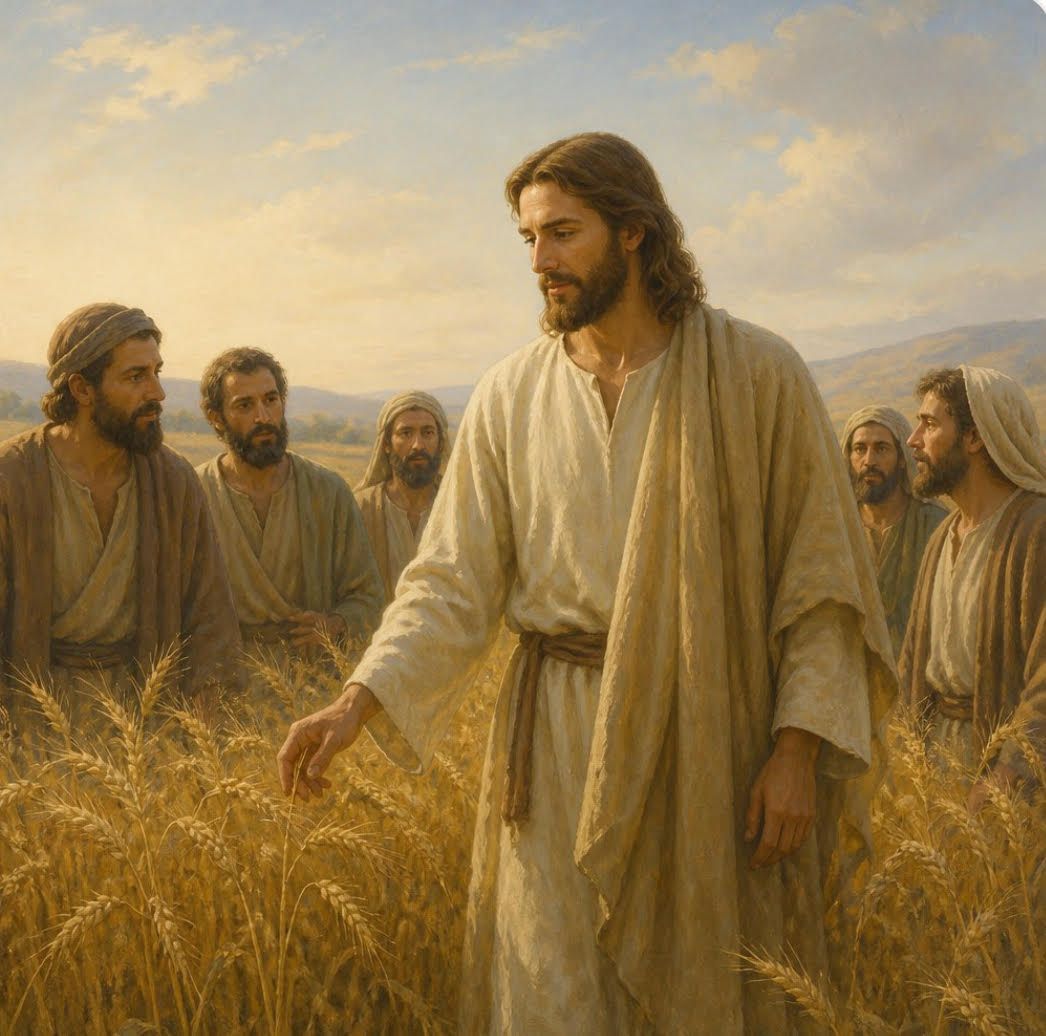
Our Lord goes on in today’s Gospel with analogies drawn from the agricultural background. So much of Jesus’ teaching shows a practical application of spiritual realities from people’ everyday experience. Now we read the parable of the weeds sown in the middle of the good seed planted in the tilled soil. The plants are not easy to distinguish until they have sprouted a slim stalk which breaks through the ground.
Surprisingly, the householder tells his servants not to remove the weeds until both the good and bad plants come to maturity. This is often seen as an image of the world at large. There are fine, honest people living together with sad cases of people who have lost their way. Good and bad inhabit the same cities, houses and countries. Only at the end of time will all be known.
How about our own lives? Does this parable of Jesus apply to us? In our lives there are many good deeds, acts of compassion for others and a bit of prayer to God. Are these not mingled at times with anger and impatience; comfort-seeking and dereliction of duty?
Perhaps our whole lives will be spent trying to overcome our base tendencies, selfishness and laziness. Do you know what Saint Josemaría Escrivá used to say to ordinary men and women striving to be good Christians? “Struggle”, he would say. The life of Christians is a battle to overcome evil and drown it in an abundance of good (as St. Paul exclaimed).
This week we should aim to improve in two aspects of our lives. First, could we pray a bit more? Do we get in two or three Rosaries a week? Can we visit our Lord in the Blessed Sacrament more often?
Second, let us try to be more patient with one member of our family in the coming week. Try to understand their weaknesses and compensate for them with our charity.
In this way, we will continue on all our days with defects and shortcomings, but not giving in to sloth. At the end of our lives we will have tried to make the road easier for those around us. We’ll be more tolerant of their mistakes when we struggle to overcome our own.
When the disciples ask Jesus about the meaning of the image, he explains: “The one who sows the good seed is the Son of Man; the field is the world; the good seed stands for the children of the kingdom; the weeds are the children of the evil one. The enemy who sowed them is the devil” (Mt 13:37-39). Thus we see that, although evil is present in the world, it does not come from God.
Our Lord shows us that the weeds coexist with the wheat until the very end of the harvest. “It is not possible to think of human history without the weeds; that is, as Jesus himself says, it is not possible to completely eradicate the weeds, because they are mixed with what is good .” [3] We see this reality in the world around us, but above all we experience it in our own hearts, where genuine desires for holiness coexist with bad inclinations. We have the same experience that caused Saint Paul so much pain when he realized that sin dwelt within him: “I do not understand my own actions. For I do not do what I want, but I do the very thing I hate” (Rom 7:15).
We shouldn’t be surprised or lose hope when we see the weeds in our heart: envy, jealousy, ignoble desires... As Saint Josemaría said: “Do not get sad if, when things seem to be going really well, you suddenly get the temptation to think you consented to some horrible desire, but really you didn’t. Have recourse to God’s mercy, relying on the intercession of his Mother and our Mother, and everything will be put right. And then laugh about it: just think, God is treating me like a saint! It doesn’t matter at all, but you should be convinced that at any moment the old man we all carry within can rise up. Be happy, and keep struggling!” [4]