
All Saints Solemnity
October 28, 2026
Gospel Reflection
Matthew 5:1-12a
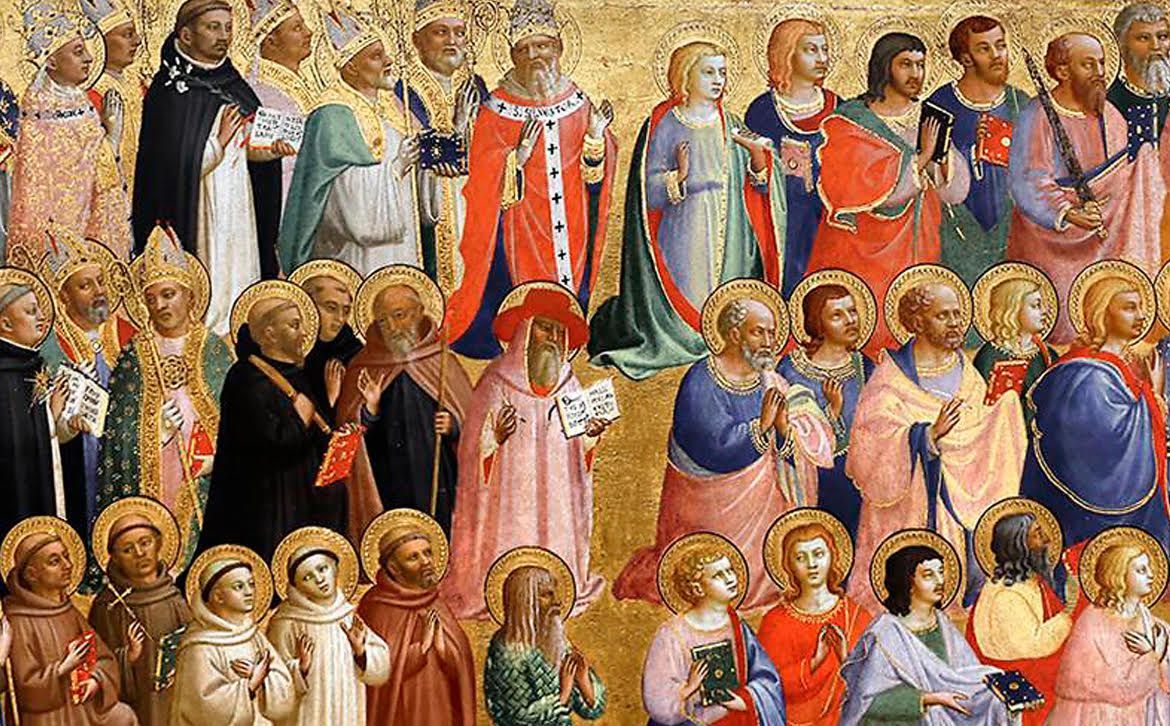
LORD, this is the people that longs to see your face (Ps 24:6). This is what the entire Church prays in the responsorial psalm for the Mass of the Solemnity of All Saints. And this is how we want to spend this feast day: seeking God’s face. “The Saints and Blesseds are the most authoritative witnesses of Christian hope, because they lived it fully in their lives, amidst joys and sufferings, putting into practice the Beatitudes that Jesus preached and that resound in the Liturgy today (cf. Mt 5:1-12a). The evangelical Beatitudes are, in truth, the path to holiness.” (Pope Francis, Angelus, 1 November 2020).
But when we recall Jesus’ words about the beatitudes, at first glance they might not seem to present a very encouraging panorama. What is set forth there are things we instinctively reject: suffering, persecution, struggle, tears... Nevertheless, Saint Josemaría Escrivá stressed that “in the Sermon on the Mount, these beatitudes are presented as the qualities that make us truly happy, holy, blessed! Thus we come to realize that “holiness, the fullness of Christian life, does not consist in carrying out extraordinary enterprises but in being united with Christ, in living his mysteries, in making our own his example, his thoughts, his behaviour. Holiness is measured by the stature that Christ achieves in us, by the extent to which, with the power of the Holy Spirit, we model our whole life on His.” (Benedict XVI, General Audience, 13 April 2011)
Today, all the saints are urging us “to set out on the way of the Beatitudes. It is not a matter of doing extraordinary things, but of following, each day, this way that leads us to heaven, leads us to family, leads us home. Thus, today we glimpse our future and we celebrate what we were born for: we were born so as to die no more; we were born to enjoy God’s happiness! The Lord encourages us and says to those setting out on the path of the Beatitudes: ‘Rejoice and be glad, for your reward is great in heaven’ (Mt 5:12).” (Francis, Angelus, 1 November 2018)
WHO SHALL ASCEND the hill of the Lord? And who shall stand in his holy place? He who has innocent hands and a pure heart (Ps 24:3-4). We know that this innocence does not consist in never committing sins or faults, or in being free from errors. This purity refers above all to the hearts of those who let themselves be loved by God and refuse to place their hope in other idols: security, control, independence, pleasures, possessions... “Sanctity is intimate contact with God: to become a friend of God, to let the Other act, the Only One who can really make this world of ours good and happy.” (Cardinal Joseph Ratzinger, “Letting God Work,” in L'Osservatore Romano, 6 October 2002)
We are convinced that when God asks us for something, He is actually offering us his life, his love. This is how Saint Josemaría Escrivá understood it: “My earthly happiness is linked to my salvation, to my eternal happiness: happy here and happy there.” Understanding this way of acting by God, who hides Himself sometimes where we don’t think to find Him, is to realize that He never wants us to be unhappy, also not here on earth. “I am every day more convinced,” the founder of Opus Dei said,” “that happiness in Heaven is for those who know how to be happy on earth.” (Saint Josemaría, The Forge, no. 1005)
What joy it gives to think of all the saints in heaven! They were like us: with the same problems and difficulties, with the same hopes and similar weaknesses. If we allow God to act in our life as they did, if we are faithful, at the end of our life we will be able to hear our Lord’s consoling words: Come, O blessed of my Father, inherit the kingdom prepared for you from the foundation of the world (Mt 25:34). We might sometimes imagine that few will be part of that Kingdom. But one of today’s readings reminds us of Saint John’s vision: I looked, and behold, a great multitude which no man could number, from every nation, from all tribes and peoples and tongues, standing before the throne and before the Lamb, clothed in white robes, with palm branches in their hands (Rev 7:9). In this countless multitude the Church celebrates all the men and women, of every age and condition, who now enjoy the ineffable happiness of heaven, and who on this earth were faithful to God’s love.