
6th Sunday in Ordinary Time
February 15, 2026
Gospel Reflection
Matthew 5:17-37
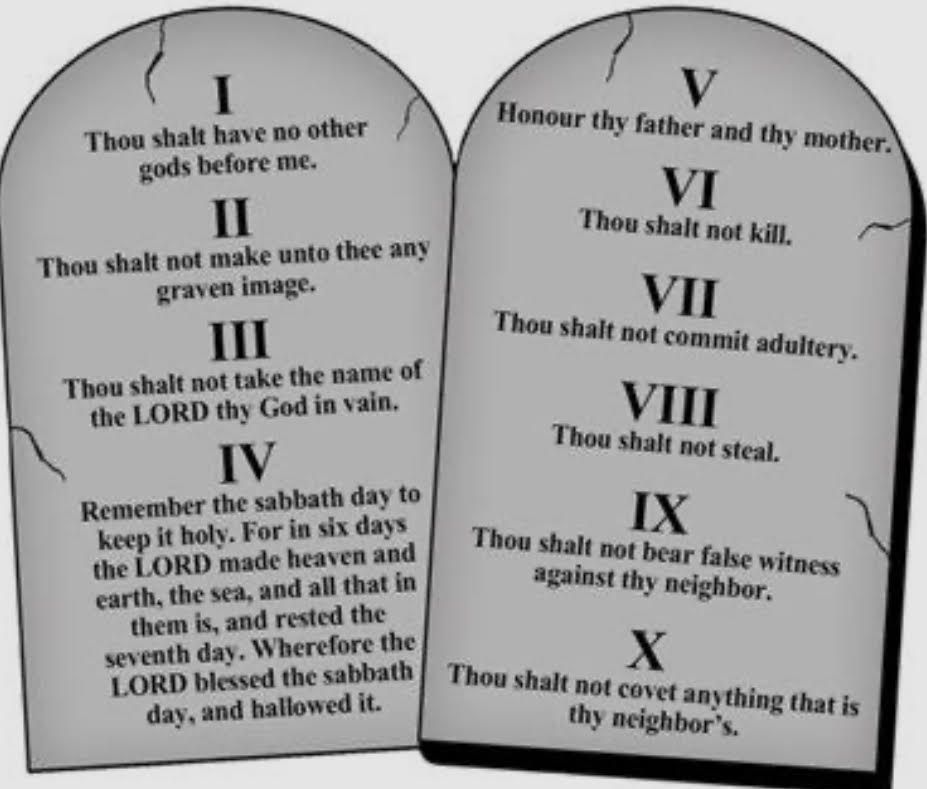
“If you wish, you can keep the commandments, to behave faithfully is within your power“ wrote the author of the Book of Ecclesiasticus in times before Our Lord. Every devout Jew knew the commandments by heart and understood that they were the essence of God’s law. Until a couple of generations ago, every Catholic learned the ten commandments as a child. However, it is not common to find young persons who can recite them. Yet these are not arbitrary rules set up a part of a game, or a test of memory. They are the essence of what it means to live a humanly good life. As such, these principles have been—in large measure—recognized by other cultures and religions. They form what the Church has called “the natural law” of morality.
Jesus confirmed the relevance and importance of the commandments on numerous occasions. He also opened people’s eyes to how they could be lived to the full. His teaching was the completion and perfection of what the Holy Spirit had taught through Moses and the prophets. He himself was the living expression of this perfection to which men and women were called as sons and daughters of God, created in his image and likeness. “Till heaven and earth disappear, not one dot, one little stroke , shall disappear from the Law until its purpose is achieved” This purpose is our sanctification, the completion of our humanity according to the pattern of Jesus Christ, true God and true man.
The Law as given to Moses gave the broad strokes of moral truth. Jesus came to refine the picture and to enable us to be shaped by it. In Matthew’s Gospel this refined picture is gathered together in its early chapters, where we find many sayings of Jesus’ sayings—many of his moral exhortations.
Some writers have pointed out that the success of our “Western” civilization is owed to Christian beliefs and Christian morality. Even though throughout history this morality has been challenged and often only imperfectly lived even by Christians, it has made a huge and positive difference in the course of history. This is because it is the truth and because it makes men and women better and, ultimately, happier. It is a proven fact that, with God’s help, we can live by the commandments and that it is worth doing so. Besides, God promises that these commandments will lead us to eternal joy in the life to come. He himself will make us perfect in love and perfectly happy.
We also should remember that Christian morality is not so much about avoiding evil as about affirming what is good. Expressions such as “Thou shalt not…” keep us from harmful ground. From there we are invited, especially by Christ, to move ahead in the direction of sincere love. Our Catholic faith and religion is about an encounter, in Christ, with the God who loves us and invites us to share in His life, his perfection and this happiness.
The Catechism of the Catholic Church puts it this way: “The Decalogue must first be understood in the context of the Exodus, God’s great liberating event at the centre of the Old Covenant. Whether formulated as negative commandments, prohibitions, or as positive precepts such as “Honour your father and mother,” the “ten words” point out the conditions of a life freed from the slavery of sin. The Decalogue is a path of life: If you love the LORD your God, by walking in his ways, and by keeping his commandments and his statutes and his ordinances, then you shall live and multiply.”