
24th Sunday in Ordinary Time
September 11, 2026
Gospel Reflection
Matthew: 18:21-35
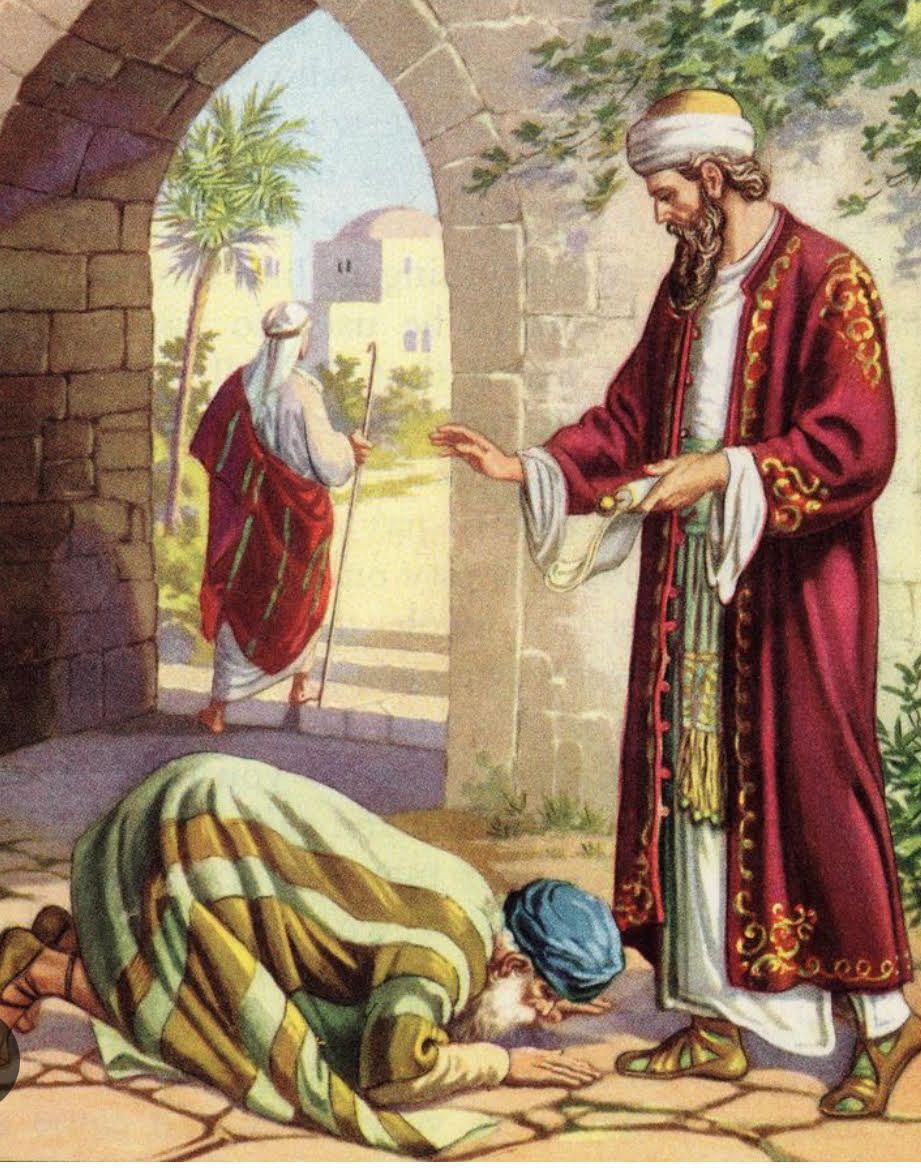
To forgive always, promptly and wholeheartedly.
God pardons those who pardon others. The mercy we show to others is the same mercy that will be shown to us. This is the measure we find in today’s readings. The First Reading tells us: He who exacts vengeance will experience the vengeance of the Lord; who keeps strict account of sin. Forgive your neighbour the hurt he does you, and when you pray, your sins will be forgiven. If a man nurses anger against another, can he then demand compassion from the Lord?
(Eccles 27:33; 28:1-9).
The Lord has perfected this command by extending it to every person and to every offence. Through his Death on the Cross, Christ has made all men brothers in a new creation. St Peter wondered aloud if this teaching was going too far when he asked Jesus how many times we must forgive another. The Lord responded: I do not say to you seven times, but seventy times seven (cf Matt 18:21-35). This means always. It is not a question of mathematical calculations. Christ wants us to learn how to overcome evil through the power of his infinite love. In the Our Father prayer, Christ taught us to pray: Forgive us our trespasses, as we forgive those who trespass against us. Today’s Liturgy of the Hours reminds us that when we pray the Our Father we have to be united among ourselves and with Jesus Christ, well disposed to forgiving one another (Liturgy of the Hours, Evening prayer). This is the only way we will attract the infinite mercy of God.
To forgive from ones heart often requires true faith. Due to the intensity of their faith, holy souls who have lived their lives in imitation of Christ often do not see the need to forgive. They realize that the only real evil is sin. Injuries and calumnies are simply not so very important.
Let us examine our conscience today to see if we are holding on to any resentment, whether real or imaginary. Has our pardon been speedy, sincere, wholehearted and unreserved? If they annoy you fifty thousand times, that’s how often you have to forgive them... Your patience has to get ahead of your bad feelings, wearing them out before they provoke more harm (St John of Avila, Sermon 25, for the 25th Sunday after Pentecost in Obras Completas, Madrid 1970).
The Lord is ready to forgive everyone. St Paul takes up this theme in his letter to the Thessalonians: See that none of you repays evil for evil, but always seek to do good to one another and to all (1 Thess 5:15). To the Colossians he writes: Bear with one another and forgive one another, if anyone has a grievance against any other; even as the Lord has forgiven you, so also do you forgive (Col 3:13). If we truly learn how to forgive others, we will find it to be almost unnecessary to do so, since we no longer feel offended. We are not following Christ’s way if our charity becomes cold to someone in the family, in the workplace, in our school. On those occasions when it is more difficult to forgive, we need to repeat the Lord’s words on Calvary: Father, forgive them, for they do not know what they are doing (Luke 23:34). In most cases, however, it is enough that we smile, or return a greeting, or do some small favour in order to resume a friendship. The little frictions of each day should not lead us to lose our peace and joy. We cannot allow our pride to get the better of us in this regard.
(Francisco Fernandez Carvajal, In Conversation with God)