
11th Sunday in Ordinary Time
June 12, 2026
Gospel Reflection
Matthew 9:36-10:8
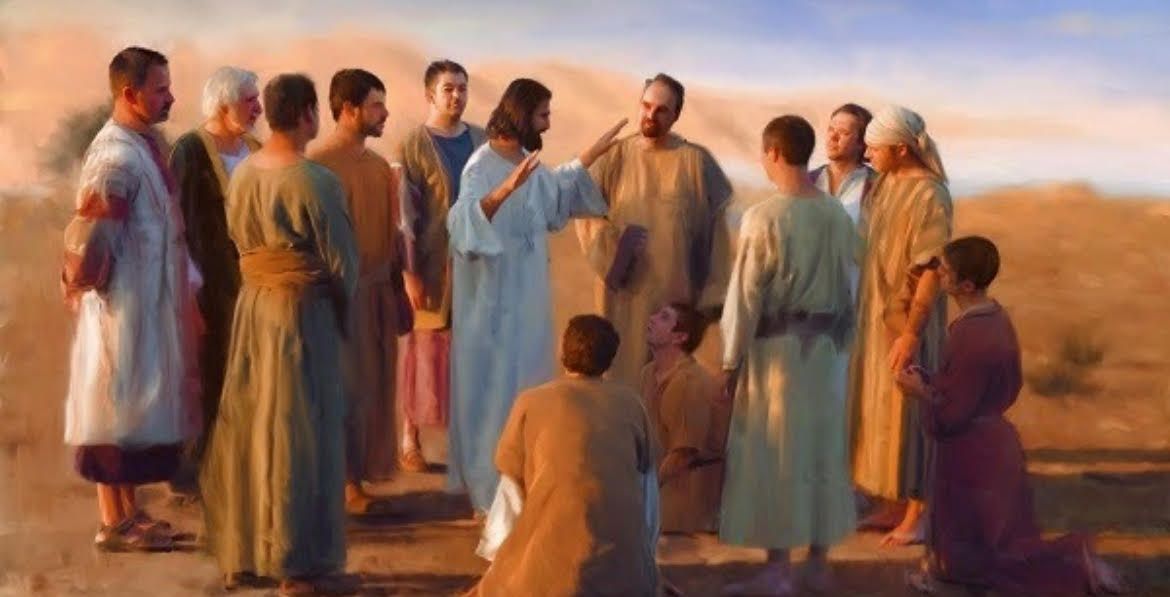
The Book of Exodus tells us how God communicated to the people of Israel, through Moses, his desire to make them a special people among all the peoples of the earth – a “consecrated nation”, a “kingdom of priests.” With this purpose in mind he had rescued them from their oppressive situation in Egypt. This choice of Israel as a “priestly people” did not mean that God did not care about other peoples. His love and, therefore, his desire to save, have always reached out to all persons, of whatever race or nation. This predilection for the descendants of Abraham included God freely choosing them to be instruments of salvation for all other families of the earth. We may say he took them apart to teach and prepare them for a universal mission of enlightenment and sanctification. It was to Israel that God first revealed his intentions for the world’s salvation. It was Israel that he trained, as a father trains his children, to live in a holy manner, making known his commandments and patiently correcting through prophets and men and women of faith.
“Salvation is from the Jews”, Jesus once told the woman of Samaria, who was of a mixed race and religion. Nevertheless, it was Jesus, Himself a Jew, who brought that salvation, rather than the Jewish people as a whole. Unfortunately, most of the Jewish people failed to see the relevance of their religion and their own calling to the rest of the world. Concerned with their own identity and culture, they remained isolated as a group, with their influence in religious matters greatly reduced. However, it was the band of disciples of Jesus, initially almost exclusively Jewish, that would be the heart of the early Church. They would come to understand, under the light of the Holy Spirit, that they were meant to reach out, like the hand of God, drawing all men and women towards the knowledge of God the Father, the Son and the Holy Spirit. “Go and teach all nations”, Jesus had told them. At first they apparently thought all Jews and converts to Judaism among the nations were to be their exclusive concern. Equally, when much earlier on Jesus remarked “The harvest is rich, but the labourers are few”, they would have thought only about their own countrymen and women.
The events that followed upon the first Pentecost made the Apostles and other followers of Jesus more and more aware that “God wants all men to be saved and to come to the knowledge of the truth” (1 Tim 2, 4). They became increasingly more broad minded and daring. They trusted on the working of God’s grace, while they also learned to understand better their non-Jewish co-citizens of the Roman Empire. Men and women who were raised according to very particular customs, and within tight circles of family and friends, came to establish deep and warm relationships with persons who were very different in their culture and appearance.
To consider this remarkable transformation of attitudes and the wonderful growth of the early Church as a result, is always very timely for us. We are Catholic Christians who are called to keep alive the apostolic outreach that was so dramatically fruitful in the early centuries of Christianity. Times and circumstances are in some ways different, but in others, much the same. The grace of God is there to help us influence and draw others to Christ and his Church. It may not happen in the same way now as then, but certainly, we should pray that it does happen! This is what Jesus advises us to do in today’s Gospel reading: The harvest is rich but the labourers are few, so ask the Lord of the harvest to send labourers to his harvest’ (Matthew 9:37).